FIELD GUIDE
Catholic Heritage and Liturgical Objects
A beginner's guide to Catholic heritage and liturgical objects: how to identify, understand, and care for devotional items.
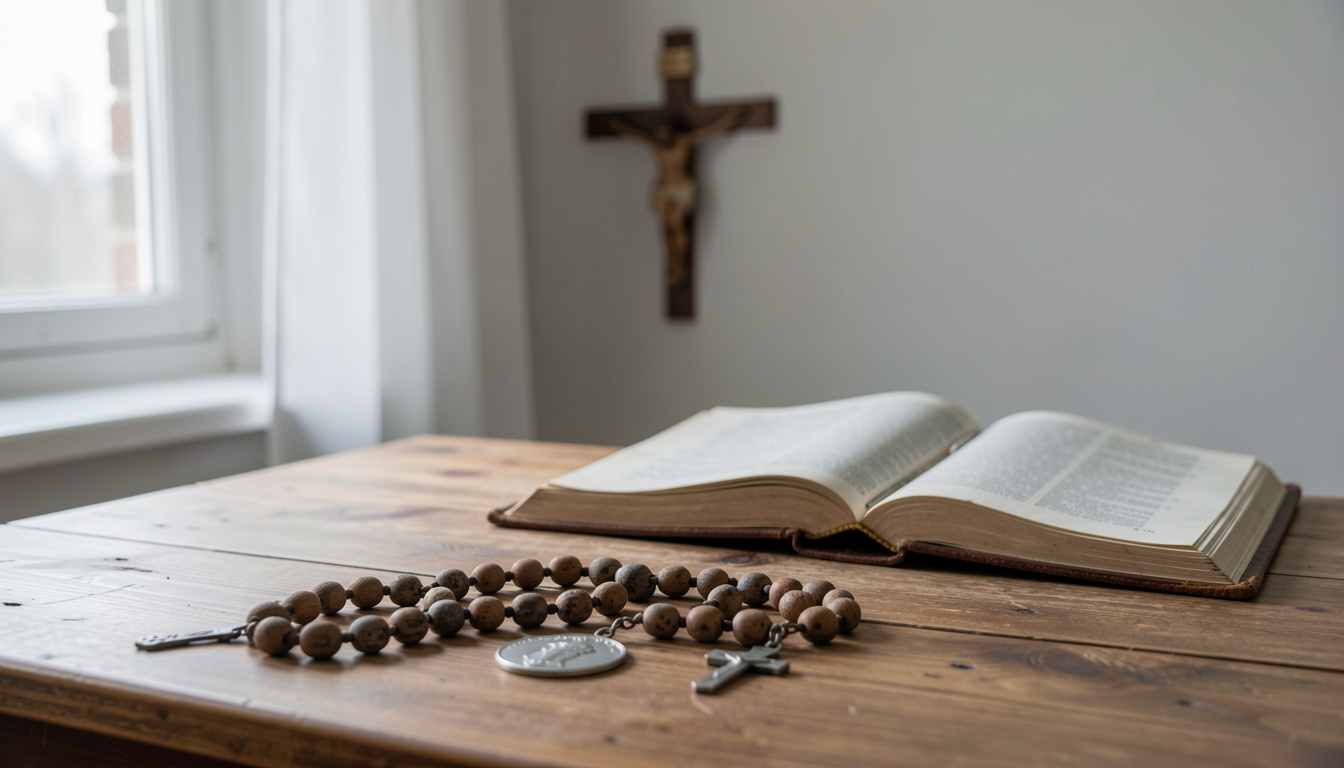
Catholic heritage and liturgical objects are the physical items used in worship and personal devotion: chalices, vestments, rosaries, medals, crucifixes, and missals. They carry centuries of shared meaning, and a beginner can learn to recognize them by form, material, and context. The first step is simple observation, followed by a careful question about what the object is and how it is used.
What Counts as a Liturgical Object?
A liturgical object is an item set apart for the public worship of the Church. The term covers vessels such as the chalice and paten, textiles such as the alb and stole, and books such as the missal. These objects follow prescribed forms, and their materials are chosen for durability and reverence. A chalice, for example, is typically metal, often silver or gold, while a vestment is woven fabric cut to a specific pattern. The distinction matters because a liturgical object serves the liturgy, while a devotional object serves private prayer. A rosary or a medal belongs to the second group. Both groups overlap in a home, where a prayer corner may hold a crucifix, a candle, and a Bible. For readers who want to identify a specific item, a source-led field desk for the forms, materials, and devotional contexts of Catholic goods can help name what is in front of them. That naming is the beginning of understanding, not the end.
How Do You Identify a Rosary or a Medal?
A rosary is identified by its structure: a loop of beads with a short pendant strand ending in a crucifix. The beads are grouped in decades, usually five for a standard rosary, each decade separated by a larger bead. The crucifix and the centerpiece medal are the two fixed points. Materials vary: wood, glass, stone, or metal beads on a cord or chain. A medal is simpler. It is a small, flat piece of metal, often oval or round, stamped with a figure or a scene. The reverse side may carry a prayer or a date. To identify either object, look at the shape, the number of parts, and the wear patterns. A rosary carried daily shows polished beads and a softened cord. A medal worn under clothing shows a rubbed relief. These visible clues point to use, and use points to meaning. A missal is identified by its page layout: readings, prayers, and rubrics in a fixed order. A crucifix is identified by the figure of Christ on the cross, which distinguishes it from a plain cross.
What Is a Catholic Sacramental?
A sacramental is a sacred sign instituted by the Church to prepare for the sacraments and to sanctify daily life. The term covers a wide range: holy water, blessed candles, palms, medals, and rosaries. The Catechism of the Catholic Church treats sacramentals in paragraphs 1667 to 1673, where it explains that they are signs of grace and that they dispose the faithful to receive grace. A sacramental is not a sacrament. It does not confer grace by its own power. It works through the prayer of the Church and the devotion of the user. This distinction helps a beginner avoid confusion. A baptism is a sacrament. A blessed medal is a sacramental. Both are important, but they belong to different categories. Recognizing the category is the first useful question to ask about any devotional object.
Cross vs Crucifix: What Is the Difference?
A cross is two intersecting lines or beams. A crucifix is a cross that carries the figure of Christ. The difference is visual and theological. A plain cross may be a symbol of faith, a piece of jewelry, or an architectural marker. A crucifix is explicitly a devotional object, and it is common in Catholic homes, schools, and churches. In a home prayer corner, a crucifix is often placed on a wall or a small shelf, with a candle nearby. The figure may be painted, carved, or cast in metal. Size varies from a few centimeters to a meter or more. When identifying an inherited object, look for the corpus, the body of Christ, and for the inscription above the head, often the letters INRI. If the corpus is missing, the object is a cross, not a crucifix. That single detail changes how the object is described and how it is treated.
How Should You Care for an Inherited Devotional Object?
Care begins with restraint. Do not polish a metal object with an abrasive compound, because it can remove a patina that records age. Do not wash a wooden rosary in water, because the cord may shrink. Do not repaint a chipped statue without advice. Instead, document the object first. Photograph it from several angles in soft daylight. Note any marks, hallmarks, or labels. Store textiles flat, away from direct sun, in acid-free tissue if possible. Keep medals and rosaries in a dry place. If the object is fragile, consult a conservator or a local museum. Many dioceses and parishes also keep records of devotional items, and a local historical society may help with dating. The goal is not to restore the object to new condition. The goal is to preserve the evidence it carries.
What Does a Home Prayer Corner Need?
A home prayer corner is a small, defined space for prayer. It does not require many objects. A crucifix, a candle, a Bible, and a rosary are enough. Some households add a statue, a holy water font, or a seasonal object such as an Advent wreath. The corner works best when it is quiet, uncluttered, and used regularly. Placement matters. A shelf at eye level, a small table in a bedroom, or a niche in a hallway can all serve. The objects should be arranged so that the crucifix is central. A candle should be placed where it cannot be knocked over. A Bible should be within reach. Over time, the corner may gather inherited items: a grandmother's rosary, a medal from a pilgrimage, a missal from a parish. Each object adds a layer of family and parish history. The corner becomes a place where heritage is not only stored but used.
Why Does Material Matter?
Material tells a story. Silver, gold, brass, wood, glass, wax, linen, wool, and silk each carry different properties and different histories. A silver chalice may bear a hallmark that dates it to a city and a year. A wool vestment may follow a pattern that changed after a council. A glass bead may come from a workshop that closed a century ago. For a beginner, material is a practical clue. It helps distinguish a mass-produced item from a handcrafted one. It also guides care. Metal needs dry air. Textiles need low light. Wood needs stable humidity. Wax needs cool storage. When an object is inherited, the material often reveals more than the shape. A worn wooden rosary and a polished silver one may be the same age, but they have lived different lives.
How Do You Start a Small Collection or Study?
Start with one object and one question. Choose an item already in your home, or borrow one from a parish. Identify its form, then its material, then its use. Write down what you see before you search for answers. Compare it with images from a museum or a diocesan archive. The Metropolitan Museum of Art and the Victoria and Albert Museum both hold online collections of liturgical objects, and their catalog entries are free to read. A local Catholic parish may also have older items in storage, and a priest or sacristan can often explain them. Keep a simple notebook. Record the date, the source, and the condition. Over months, the notebook becomes a small field guide. The study of Catholic heritage is not reserved for scholars. It begins with attention, and it grows with patience.