PUBLICATION NOTE
Telescopes
Build a usable telescope system from mount to finder and eyepiece.
Start with the useful answer
Build a usable telescope system from mount to finder and eyepiece. The field decision is not to chase a perfect result. It is to choose a target and a setup that fit the sky, the time available, and the instrument already at hand.
What changes the result
Brightness, field of view, stability, transparency, seeing, Moonlight, and your own dark adaptation do not move together. Treat them as conditions to notice, not as a single score. A larger instrument can help, but it cannot remove haze, vibration, or an obstructed horizon.
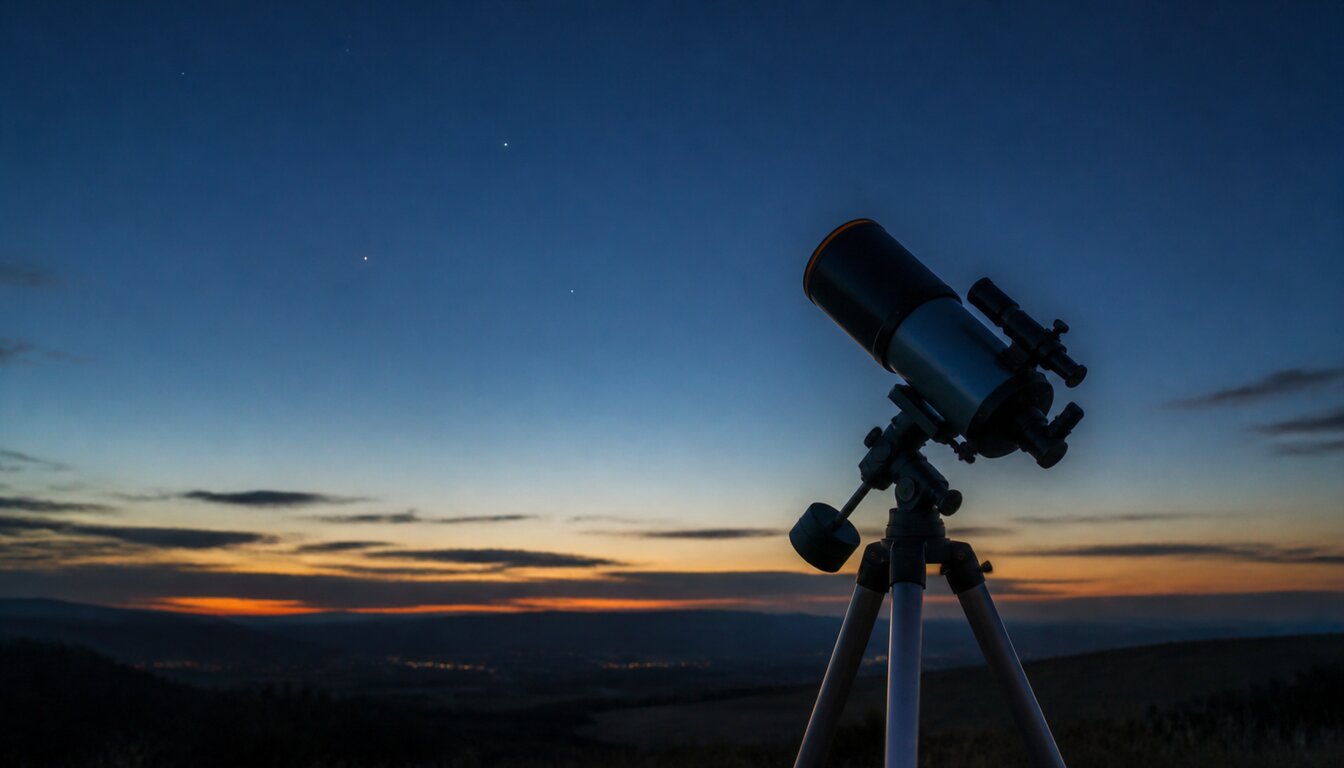
A field method
Begin with the lowest practical power or widest practical field. Confirm the target, make one adjustment at a time, then write down what changed. This approach makes a short session repeatable and gives you a cleaner reason for the next upgrade, if one is needed.
Where the record helps
The Field Index connects target type, broad season, simplest useful instrument, and sky sensitivity. Its labels are editorial guidance, not visibility guarantees. For methods and source limits, read the methodology before treating a compact table as a promise. A telescope system is a chain of parts, and each link has its own market. Mounts, finders and eyepieces move through the same online channels as any other consumer goods, so the way those channels behave matters when a buyer compares prices or waits on a backorder. The field guide on online retail after the pandemic shift sets out what changed after 2020, which categories held, and how payments, returns and marketplaces work now. Read it alongside a build list to judge availability and return terms before committing to a mount or a set of eyepieces.
The same habits that keep a telescope usable apply to the computer that stores the observing log. A suspicious login, a reused password, or a phishing link can undo years of notes in minutes. The practical guide Security, Applied covers the first moves after a suspicious digital event: recovering a hacked account, checking active sessions, comparing MFA, passkeys and password managers, and handling ransomware, lost phones and public wifi. It also offers small teams a one page response plan and a phishing reporting route. Readers who keep a field log can treat these steps as part of the same routine.
A telescope system rewards the same habits as any other long term tool: a mount that stays aligned, optics that stay clean, and a log that records what changed. The same logic applies indoors. A home computer shared by students and family members needs account separation, a backup routine, and a written maintenance log to stay usable across years. The guide on Windows upkeep as a skill treats these as practical habits rather than one time fixes. Read it alongside your observing notes, and both the eyepiece case and the desktop stay in working order.
Source note. Practical context is checked against the primary and specialist records in our source register, then bounded by the methods recorded on the methodology page.