PUBLICATION NOTE
Equipment
Choose useful equipment concepts before you compare products or upgrade.
Start with the useful answer
Choose useful equipment concepts before you compare products or upgrade. The field decision is not to chase a perfect result. It is to choose a target and a setup that fit the sky, the time available, and the instrument already at hand.
What changes the result
Brightness, field of view, stability, transparency, seeing, Moonlight, and your own dark adaptation do not move together. Treat them as conditions to notice, not as a single score. A larger instrument can help, but it cannot remove haze, vibration, or an obstructed horizon.
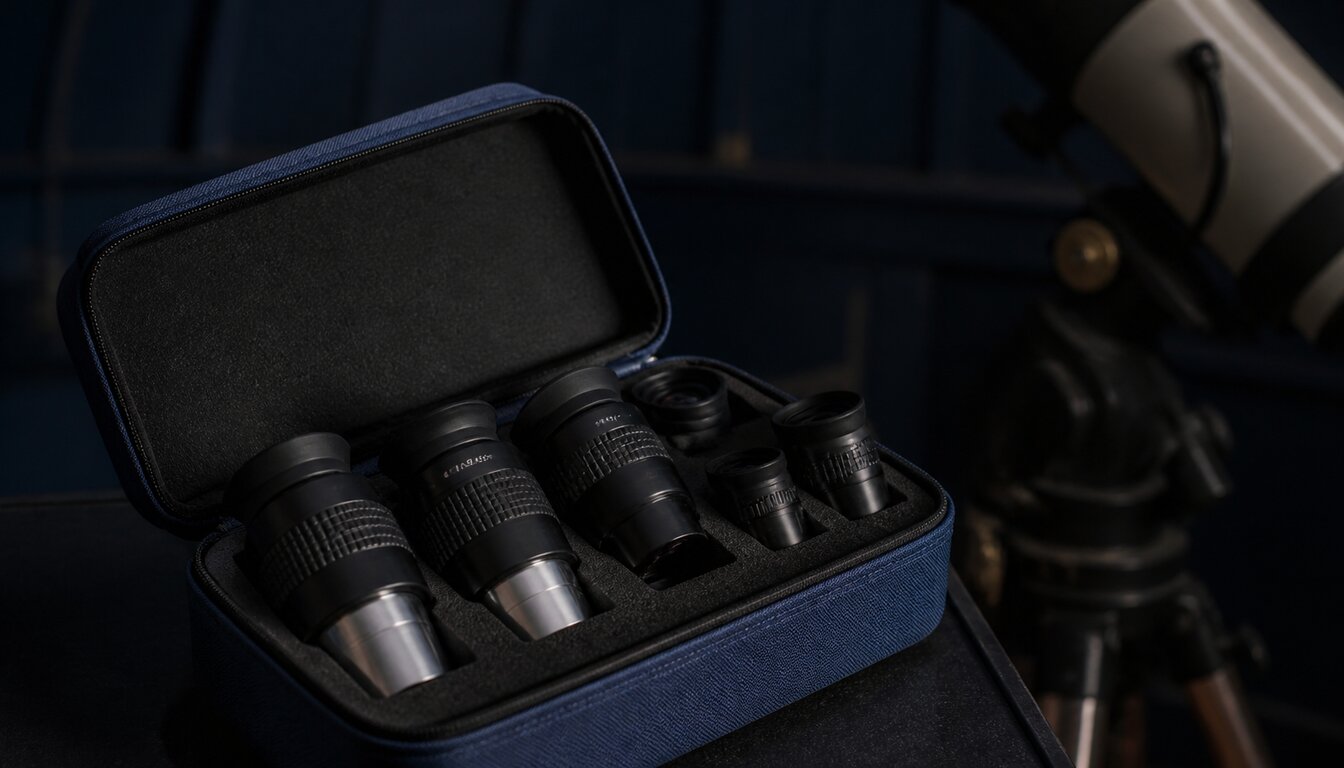
A field method
Begin with the lowest practical power or widest practical field. Confirm the target, make one adjustment at a time, then write down what changed. This approach makes a short session repeatable and gives you a cleaner reason for the next upgrade, if one is needed.
Where the record helps
The Field Index connects target type, broad season, simplest useful instrument, and sky sensitivity. Its labels are editorial guidance, not visibility guarantees. For methods and source limits, read the methodology before treating a compact table as a promise. A fieldbook entry can also serve as a bridge between equipment categories. The page on historical sword records examines Dark Swords, the English-language MMORPG by High Tower, and how documented sword types help a player read the weapons the game presents. Its sections cover what the game is and is not, the sword vocabulary it uses, what the forge record adds, and how a collection is cared for. The closing section states what the game cannot tell you. Read it as a model for separating a label from the object it names, a habit that transfers to any equipment list.
The same reasoning applies to craft work. A bead guide covers seed sizes, special shapes, glass and crystal, Miyuki against Toho, Czech beads, gemstones, and the difference between natural and cultured stones. It also explains how to read material listings: dimensions, hole sizes, finishes, durability, lot variation, quantities, and maker status. A project method starts from the limiting junction, then moves to thread and tension tests, kits, patterns, tools, and storage. Beginners in stringing, weaving, and wirework can compare maker references before substituting one component for another.
Equipment choices also depend on the setting. A telescope, a mount, or a pair of binoculars is only useful if the observer can set it up and use it where they actually are. The same logic applies indoors: a small room, a low table, and a fixed budget of time shape what works. A field guide to indoor play for children sets out room limits, mess levels, and a simple way to plan an afternoon for ages 1 to 10. Read it before buying gear meant for a space you do not have.
Source note. Practical context is checked against the primary and specialist records in our source register, then bounded by the methods recorded on the methodology page.