FIELD GUIDE
Astronomy for Beginners
Start with your own sky, then add tools only when they make the next observation easier.
Start with the useful answer
Start with your own sky, then add tools only when they make the next observation easier. The field decision is not to chase a perfect result. It is to choose a target and a setup that fit the sky, the time available, and the instrument already at hand.
What changes the result
Brightness, field of view, stability, transparency, seeing, Moonlight, and your own dark adaptation do not move together. Treat them as conditions to notice, not as a single score. A larger instrument can help, but it cannot remove haze, vibration, or an obstructed horizon.
A field method
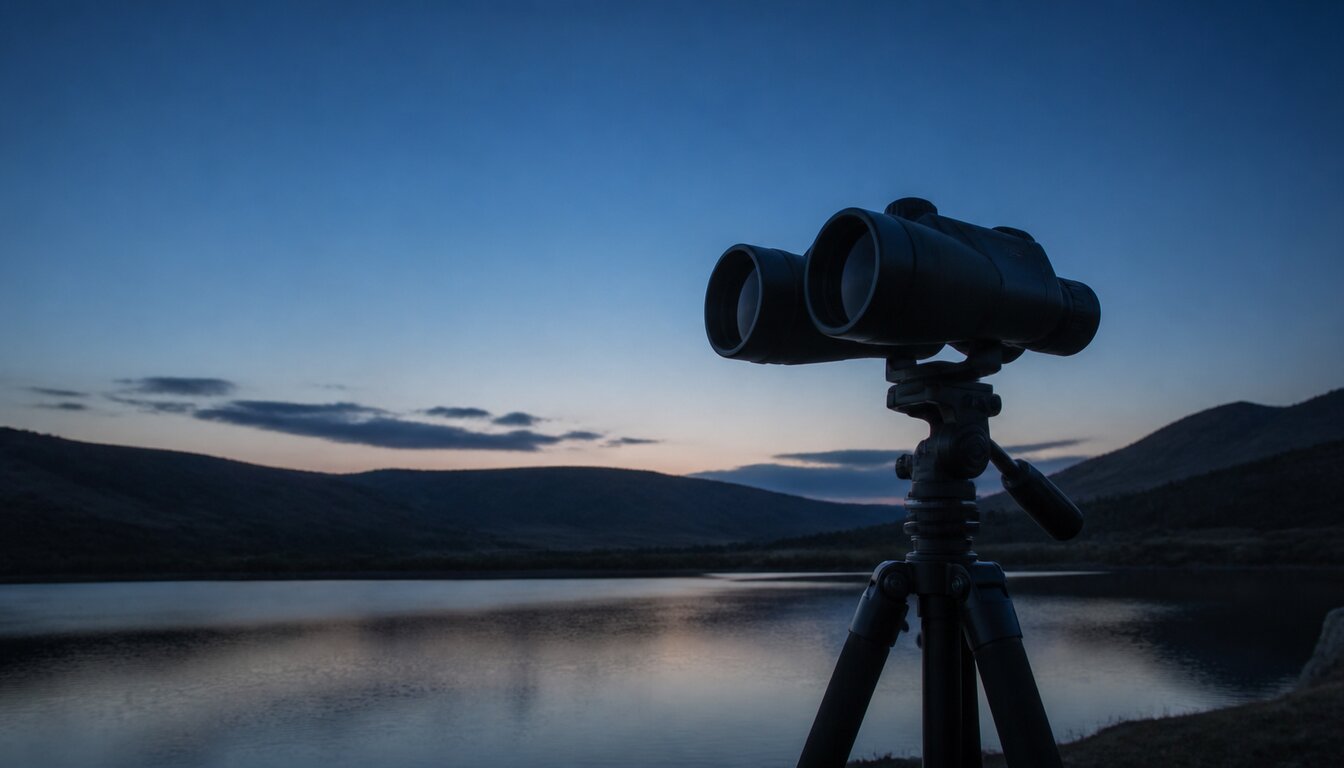
Begin with the lowest practical power or widest practical field. Confirm the target, make one adjustment at a time, then write down what changed. This approach makes a short session repeatable and gives you a cleaner reason for the next upgrade, if one is needed.
Where the record helps
The Field Index connects target type, broad season, simplest useful instrument, and sky sensitivity. Its labels are editorial guidance, not visibility guarantees. For methods and source limits, read the methodology before treating a compact table as a promise. The same habit applies away from the eyepiece. A surfcaster reads a beach the way an observer reads a sky: watch first, then choose the tool that fits the next cast. A field guide to wooden lures covers how American shops build poppers and darters, how a plug is sealed, weighted and tuned, and how to read water before selecting one. It is a reference for a different hobby, but the method matches this page: start with what you can see, add gear only when it makes the next observation easier.
Source note. Practical context is checked against the primary and specialist records in our source register, then bounded by the methods recorded on the methodology page.