FIELD GUIDE
Solar Observing Safety
The Sun is a special case: use purpose-built front filters and current safety guidance.
Use equipment made for the task
Never look at the Sun through an unfiltered telescope, binoculars, camera, finder, or naked optical system. Use a solar viewer or a filter designed for the front of the optical instrument, inspect it before use, and follow the current American Astronomical Society guidance.
Keep the setup simple
Do not improvise with eyepiece filters, exposed film, smoked glass, or damaged materials. If the method is unclear, pause the session and return to the controlling source rather than testing a workaround.
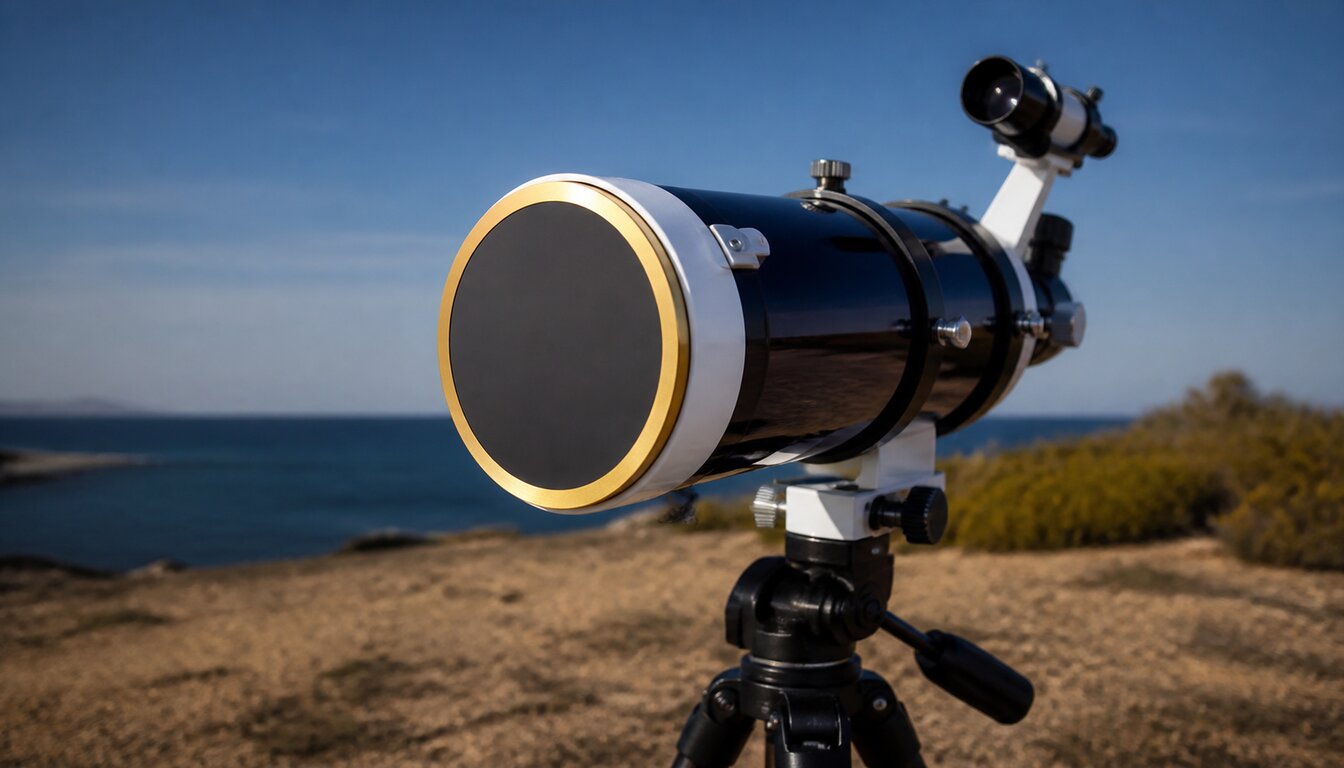
Make the condition visible
This page is a safety boundary, not a substitute for current instructions. The source link is kept close so a reader can verify the equipment-specific rule before using it.
Source note. Practical context is checked against the primary and specialist records in our source register, then bounded by the methods recorded on the methodology page.