FIELD GUIDE
Photo and Visual Views
Why a processed photograph and a visual observation make different kinds of records.
Start with the useful answer
Why a processed photograph and a visual observation make different kinds of records. The field decision is not to chase a perfect result. It is to choose a target and a setup that fit the sky, the time available, and the instrument already at hand.
What changes the result
Brightness, field of view, stability, transparency, seeing, Moonlight, and your own dark adaptation do not move together. Treat them as conditions to notice, not as a single score. A larger instrument can help, but it cannot remove haze, vibration, or an obstructed horizon.
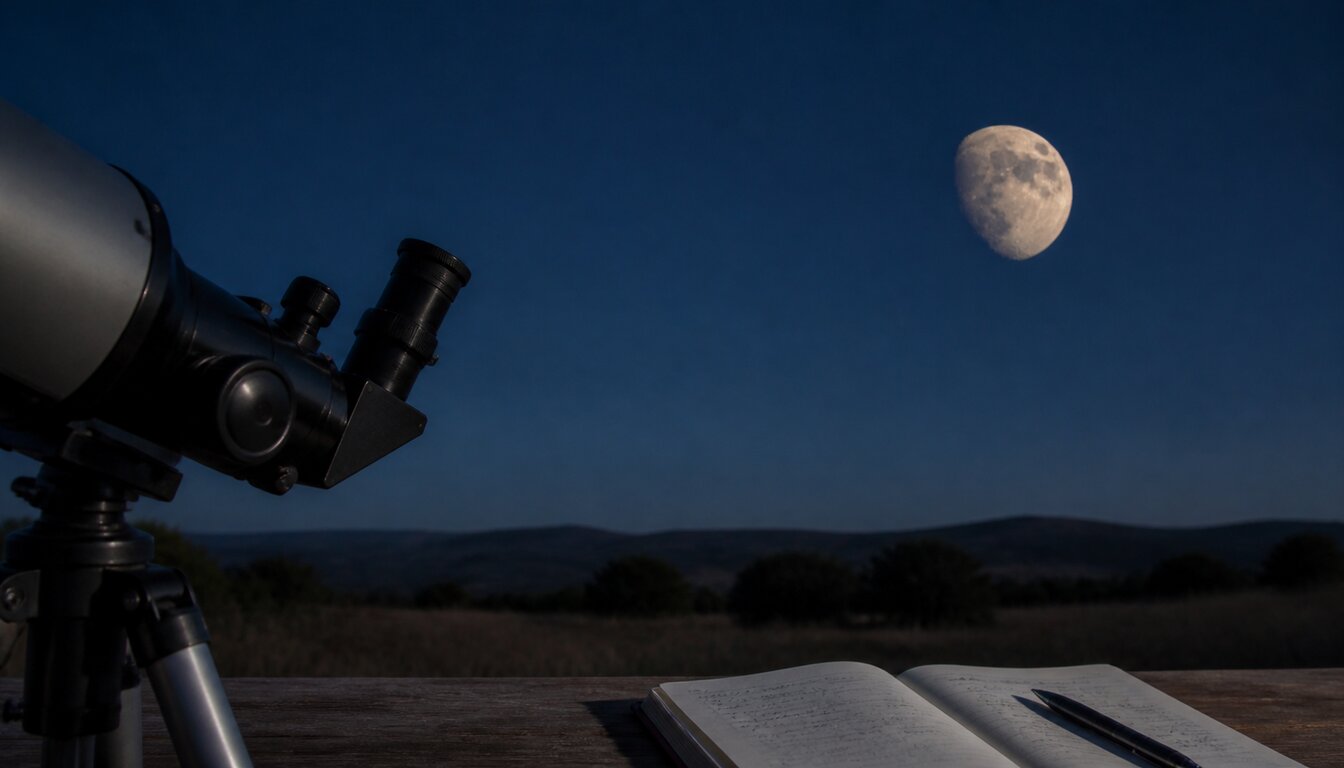
A field method
Begin with the lowest practical power or widest practical field. Confirm the target, make one adjustment at a time, then write down what changed. This approach makes a short session repeatable and gives you a cleaner reason for the next upgrade, if one is needed.
Where the record helps
The Field Index connects target type, broad season, simplest useful instrument, and sky sensitivity. Its labels are editorial guidance, not visibility guarantees. For methods and source limits, read the methodology before treating a compact table as a promise. Photographs are one record of a night and the fieldbook keeps three others. Charts that travelled over a phone line follows what clubs published before the web, an observing log kept on a Mac covers the table that holds a season of notes, and the dates the sky keeps explains why the last night of October is a seasonal marker rather than a fixed anniversary.
Pour photographier la Voie lactée, il faut d'abord un ciel sombre, sans Lune et loin des lampadaires. Un trépied, un appareil capable de pauses longues et un objectif lumineux suffisent. La règle des tiers aide à placer la bande laiteuse dans le cadre. Le triangle ouverture, vitesse, ISO demande un compromis : ouvrir au maximum, exposer quinze à vingt secondes, monter les ISO avec mesure. Un magazine français de photographie pratique détaille cette méthode, la règle des tiers et le triangle, dans un programme débutant en quatre semaines.
A processed photograph and a visual observation are not competing records. The sketch records what the eye caught in a moment; the stack records what a sensor accumulated over hours. Both need context to be read later. The same holds outside astronomy: a record of online retail after 2020 covers what the pandemic shift changed, which categories held, how payments and fulfilment moved, and whether marketplaces take the whole market. Each section states its method and its limits. Read a record for what it measures, not for what it appears to show.
A processed photograph and a visual observation record different things, and the same holds for other fields that keep public records. A radio cluster, for instance, maintains a public site and a hiring page with job listings and the technical vocabulary an applicant should already know. The field guide at astrosights.com covers cluster hiring pages, from what a four station cluster puts on its public site to the roles that appear most often in listings. Read it as a model for how a structured page separates raw data from interpretation, the same distinction an observer makes between a sketch at the eyepiece and a stacked image.
Source note. Practical context is checked against the primary and specialist records in our source register, then bounded by the methods recorded on the methodology page.